Ben Givens and Rachel Lake's Courtship and Marriage
East of the MountainsBen Givens and Rachel Lake’s courtship grows out of shared labor in the Givens family orchards and endures across distance, marriage, and Rachel’s death. Its defining images are both ordinary and enduring: cherries picked together, a first declaration of love over a pay phone, a train journey through Italy, and the red and white roses Rachel asks Ben to remember. The relationship’s later significance lies not in a detailed account of married life, which the evidence does not provide, but in how these remembered moments persist as a promise Ben carries into bereavement.
Meeting in the Cherry Harvest
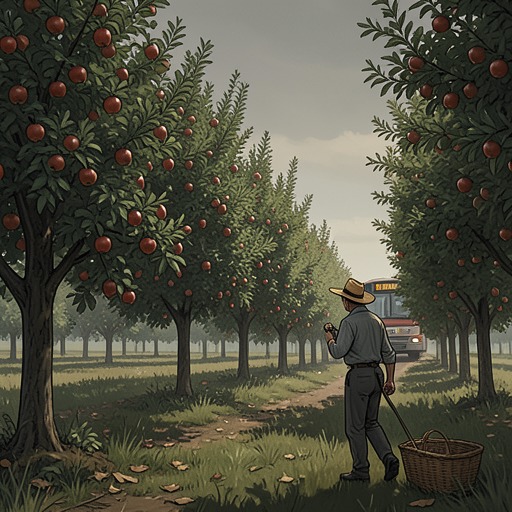
Rachel enters Ben’s life in June, when his father sets the eleventh as the start of the cherry harvest. She has come from Waterville, Maine, to stay with her aunt, Mrs. Emery, and help with the picking. At first she is an unfamiliar presence among the workers: she wears Mrs. Emery’s oversized denim trousers and flannel shirt, cinching the trousers with Manila twine. Ben notices her high in a ladder among the branches, reaching for fruit.
The harvest gives their first meeting a particular rhythm. Ben and the other pickers work through rows of trees, stripping the limbs carefully and keeping the cherry stems intact. The labor extends across thousands of trees and through weeks and months of fruit. During the first day, heat softens the cherries and ends the picking; as Rachel comes out of the orchard shade, she wipes her face, drinks from a water jug, and runs her hands through her walnut-colored hair. Their relationship begins within this collective work, in a landscape where attention is directed both to one another and to the fruit that must be gathered before it spoils.
Separation and a Declaration of Love
Rachel’s stay is temporary. She has saved money for train fare and is traveling west to begin nursing training in San Francisco. The journey represents more than escape from Waterville: she has come to see nursing as worthwhile work and looks forward to caring for the ill. When it is time to leave, she and Ben stand knee-deep in the river and embrace in the current. She tells him she will miss him.
Their farewell continues in the orchard rows, where they kiss out of sight. Rachel promises to write from San Francisco and leaves him the telephone number at her dormitory. Ben answers her firm request for good luck with a wish for her success. The scene marks a separation rather than a rejection: she leaves to pursue the life she has chosen, while the means of staying in contact remain open.
In Seattle, Ben takes a room in a flophouse in Pioneer Square. The room is lonely, and the street lights burn through the night. Before boarding a bus for Fort Lewis, he makes his first telephone call, relying on the operator and trying twice after he has to ask the bus clerk for change. When he finally reaches Rachel, he tells her that he loves her. The words come more easily over the telephone; Rachel says that she feels the same. The call is brief, ending when his purchased time runs out, but its mutual declaration turns separation into an explicit commitment. Ben waits in the bus station with his duffel bag, at the beginning of a new life and with Rachel’s answer still present between them.
Marriage, Italy, and the Rose Promise
The relationship later becomes a marriage. Ben recalls that he and Rachel had their honeymoon in Italy, fifty-two years before the conversation in which he mentions it. A memory of their train journey from Mantua preserves the marriage not as a milestone alone but as a shared experience: they sit together in silence as the train gathers speed, its vibration settling, while the sun colors the sleeper-car window and the countryside moves past. The scene’s stillness and companionship contrast with the urgency of the harvest and the departures that shaped their courtship.
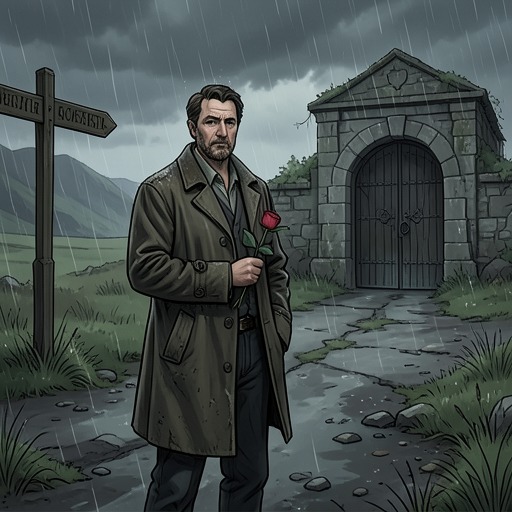
On that night, after they have lain together and shared their last wine, Rachel speaks of roses: red and white flowers becoming a single bush of pink. Ben agrees. The image gives their marriage a language of joining: distinct colors are not erased but brought together in one growth. The evidence offers this promise as an intimate exchange rather than an account of their everyday married life, making its later return especially consequential.
Bereavement and the Afterlife of the Bond
Rachel repeats the rose promise the day before her surgery, two hours before she is due to go in. She identifies Ben with red and herself with white, asking him to remember the flowers and how much she loves him. Ben tries to reassure her with the very low mortality rate for mitral-valve replacement in someone in her condition. Rachel answers that she does not plan to die, but asks him to remember the roses if she does. Her words hold confidence and the possibility of loss together without resolving the uncertainty for either of them.
For Ben, the remembered request makes love inseparable from grief. The roses are not merely a symbol of a marriage already completed; they are Rachel’s final instruction about what should survive her. Years later, while traveling through Italy’s remembered past, Ben can still recover the train, the shared silence, and the promise with vividness. His recollection gives their relationship a continuing presence in the narrative: the courtship’s orchard and telephone call lead toward a long marriage, while Rachel’s last appeal leaves Ben with a shared image to carry after her death.